People in Parliament
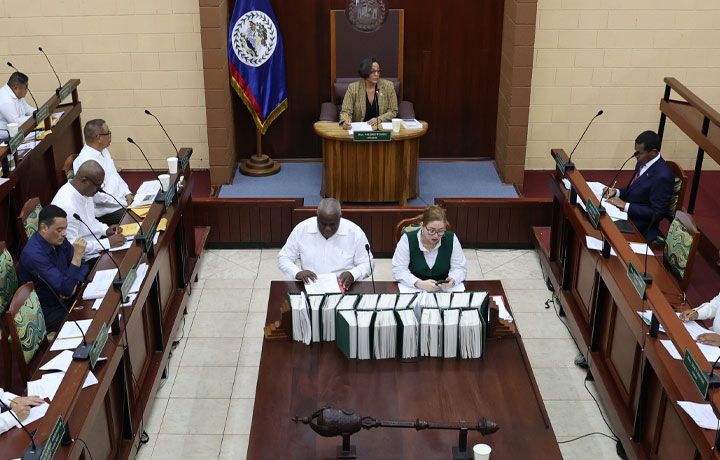
In Belize there are persons that have specific duties to perform in how Parliament operates.
Governor General
The Governor-General represents the Queen in Belize and has important duties to perform in Parliament. He assents to Bills passed in the House of Representatives and the Senate so that they become Laws of Belize. The Governor-General also opens the first Sitting of the House of Representatives (Inaugural Sitting) by delivering what is known as the Government Speech (Throne Speech). The Government Speech usually entails Government’s intention for the coming session or term of Parliament. The Governor-General also ends a parliamentary session and term by proroguing and dissolving, respectively, the National Assembly by proclamation. Therefore, after any general election, the Governor-General appoints by proclamation published in the Gazette the date, the place and the time for the holding of a session of the National Assembly. In addition, the Governor-General appoints Members of the Senate.
Speaker of the House of Representatives
The Speaker of the House of Representatives presides over the Sitting of the House. It is the Speaker’s role to ensure that there is order and decorum during a Sitting and also to apply the rules of the House (Standing Orders), and to oversee procedures. The Speaker chairs the National Assembly Staff Committee and is also the chief diplomatic representative of the House of Representatives.
Deputy Speaker of the House of Representatives
The House of Representatives elects a Deputy Speaker from among its Members, not being a Minister. The Deputy Speaker may perform the Speaker’s role when the Speaker is absent. The Deputy Speaker chairs the Committee of the Whole House which considers Bills clause by clause.
Prime Minister
The Prime Minister is the leader of the House of Representatives. This is largely separate from his Executive role. The Prime Minister plays a major role in the House of Representatives and has significant influence over the Public Business on the Orders of the Day. The Prime Minister also leads the Government’s contribution to major debates
Ministers and Ministers of State
The Governor-General appoints Ministers and Ministers of State on the advice of the Prime Minister. The Ministers of States are part of the Executive and may also be a part of Cabinet meetings if invited by the Prime Minister. Members of the Senate can also be appointed as Ministers. Ministers are responsible for particular areas of public administration and/or policy called ministerial portfolios. Ministers are accountable to the House for thier responsibilities. A Minister’s role in the House is to introduce Bills to the House that relate to their portfolios and to lead debate on those Bills through the stages in the House. They also account for Government activities under their portfolios by replying to questions by Opposition and Backbench Members and by making statements to the House on matters covered under their portfolios.
Leader of the Opposition
The Leader of the Opposition is the Member of the House of Representatives who leads the largest political party that is not part of the Government. Its role is to be the leader of a government in waiting and to lead opposition responses in major debates. The Leader of the Opposition sits directly opposite the Prime Minister in chamber.
Clerk of the National Assembly
The Clerk of the National Assembly is the principal officer to the House of Representatives and the Senate. The Governor-General appoints the Clerk on the advice of the National Assembly Staff Committee. The duties of the Clerk are to advise the Speaker and Members on the rules, practices, and custom of the House; to record the proceedings and decisions of the House; to certify Bills ready for Governor-General’s Assent; to issue the Order Paper for each Sitting to Members; to administer the Oath or Affirmation of Allegiance to new Members of the National Assembly; and to provide secretarial service to the House and Senate Committees.
Deputy Clerk of the National Assembly
In the absence of the Clerk, the Deputy Clerk shall carry out the duties of the principal officer. The Deputy Clerk is also appointed by the Governor-General on the advice of the National Assembly Staff Committee. The Deputy Clerk sits at the Clerk’s Table during meetings of the House of Representatives and the Senate. In addition of being the Clerk’s assistant in all parliamentary procedures, the Deputy Clerk is also the personnel officer of the staff of the National Assembly.
Macebearer
The Macebearer is an officer of the House of Representatives. The Macebearer is responsible to the Speaker for maintaining proper standards and behavior for visitors in the galleries of the House of Representatives. At the start of each Sitting of the House of Representatives, the Macebearer carries the Mace and precedes the Speaker into the Chamber and announces the Speaker’s arrival. While the House is in session, the Macebearer sits at the other end of the Clerk’s Table.
President of the Senate
The President of the Senate has the same responsibility as the Speaker of the House of Representatives. She/he presides over the Sitting of the Senate. It is the President’s role to ensure that there is order and decorum during a Senate Sitting and also to apply the rules of the Senate (Standing Orders of the Senate). The President of the Senate chairs the Committee of the Whole Senate, the Constitution and Foreign Affairs Committee of the Senate and also any other Committee of the Senate. The President of the Senate is the Deputy Chairperson to the National Assembly Staff Committee.
Vice President of the Senate
The Senate elects a Vice President from amongst the appointed Members who are not Ministers. The Vice President may perform the role of the President of the Senate when he/she is absent.
Leader of Government Business
The Leader of Government Business is appointed by the Prime Minister to take charge of the Government business in the Senate. He moves Motions and Bills on behalf of the Government. The Leader of Government Business may ask the President of the Senate to summon special Sittings of the Senate. He also leads debates on Government Bills and Motions.

